Translate

Friday, March 8, 2013

The Gospel Coalition vs the Emergent Church,

Wormtongue at the Listless Wheel

(Rob Bell = Grima Wormtongue)


“Did God actually say . . . ?”
- Genesis 3:1

In Tolkien’s The Two Towers we are introduced to Grima Wormtongue who, under the pretense of caring for Theoden the King, has wickedly ingratiated himself and usurped his moral authority. Indeed, as Wormtongue’s influence over Thedoen grows, the king’s power dissipates. In the Peter Jackson film, we see this vividly in the way Theoden is depicted as a mere shell of a man, somewhat skeletal with a gray pallor and dull, glazed eyes. His counselor has a parasitic effect. It’s a dramatic link, to be sure, but I think of this relationship when I ponder the ambitions of the emergents, the neo-evangelicals, or whatever they’re calling themselves now (or not calling themselves) in seeking to commandeer the the conversation of the evangelical movement. “Christianity must change or die,” a satanic bishop wrote a few years back. His spiritual progeny are catching up to agree with new books and new publishing houses, new conferences, blogs, and talk shows. But we’ve seen the trajectory for years. They can take us no place worth going. Talking out of both sides of their mouths, we ought not be surprised when the forked tongues become more evident.

Professing to be wise, they reveal themselves to be fools. “Did God actually say?” they begin. Then they’ll tell you the answer: “No.” Before long, they insist the gospel cannot expand in this brave new world without a brave new faith that coddles disbelief and calls sin virtue. When you get right down to it, the whole enterprise is nonsensical and self-defeating. Cultural rebukes from a relativistic reading of the Scriptures and of historic orthodoxy guts any presumed authority in the rebuke from the outset. In a comment thread at one of these wormtongue-y blogs I read someone’s defense of the use of p()rnography in a marriage, arguing the need to respect differing values. The commenter also maintained that complementarian marriages were evil. “Get a brain, morans,” indeed.

The wizard Gandalf’s rebuke of the parasitic Wormtongue is fitting. In Tolkien’s book:

“Down snake!” he said suddenly in a terrible voice. “Down on your belly! How long is it since Saruman bought you? What was the promised price?
Well, the expected reward is the same stuff they accuse prominent evangelicals of greed for: money, power, prestige. Here is the rebuke as depicted in Jackson’s film adaptation:

Be silent. Keep your forked tongue behind your teeth. I have not passed through fire and death to bandy crude words with a witless worm.
Church, only let us hold true to what we have attained (Philipians 3:16). In the days coming, a regular re-reading of the book of Jude might be in order. The talking faces of the post-evangelical Jello salad want to help evangelicals navigate the uncharted waters of post-Christendom. But Jesus gave us plenty of words about unfaithful stewards and hired hands. We can learn nothing from the heterodox about navigating “the future of evangelicalism” except how to shut the engines off and drift.

Jared C. Wilson

Don't Like the God of the Bible, Rob Bell heretically says just create your own god then

ROB BELL RELEASES NEW TRAILER FOR UPCOMING BOOK, COMPARES GOD TO AN OLDSMOBILE

RobBell

Christian Research Network is a sister work of Apprising Ministries; and both of these online apologetics and discernment ministries were among the first to cover apostate Rob Bell, former rock star icon of the Emerging Church.
In fact, back in 2008 I would end up writing Rob Bell And Christian Universalism. Therein I began to show you that Rob Bell was already leaning toward, as well as beginning to teach, a form of universalism where—even after a time in some type of purgatory—eventually everyone will end up saved.
This would lead to his most controversial book Love WinsWell, he’s now attempting to draw controversy to his new book. Against this backdrop CRN associate editor Erin Benziger now brings us up to speed concerning this wolf in sheep’s clothing:
Rob Bell’s forthcoming book, What We Talk About When We Talk About God, already has begun to cause a stir with the release of two trailers offering teasers of the book’s content. According to the publisher, in this book, Rob Bell “does for the concept of God what he did for heaven and hell in his book Love Wins.”
In the most recently released trailer, Bell compares God to Oldsmobiles, a car that, though once quite popular and reliable, no longer is being manufactured. Bell begins the video by describing the Oldsmobile he used to drive as a 20-year-old. He says it “served him well in those years,” and then continues,
But they don’t make Oldsmobiles anymore. They used to be popular, but the factories have shut down, and eventually the only ones left will be collector’s items, relics of an era that has passed. Oldsmobile couldn’t keep up with the times and has become more and more something of the past, not the future. For them, not us. For then, not now.
For a growing number of people in our modern world, God is a bit like Oldsmobiles.
Things have changed; we have more information and technology than ever. We’re interacting with a broader, more diverse range of people than ever, and the tribal God, the only one many people have ever heard of, appears more and more small, and narrow, and irrelevant, and in some cases just plain mean, and other times not that intelligent.
SOURCE
The former pastor of Mars Hill Bible Church continues and shares examples of these allegedly outdated, irrelevant ideas of God. He infers that the issue of women in leadership within the church, which is forbidden as taught in 1 Tim. 2:12, is one that should be reconsidered. He challenges Christian convictions regarding the sin of homosexuality, and appears to belittle those who proclaim the importance of adhering to a literal, six-day creation.
Denny Burk, Associate Professor of Biblical Studies at Boyce College, offers his summary of what Rob Bell implies in the video:
The traditional doctrine of God and his ways is as passé as an Oldsmobile. It was good for a time, but now it is no longer relevant. Modernity presents us with new evidence, and that new information compels us to cast aside the ancient faith in favor of a new model. In short, it calls for a revision of evangelical theology. Your belief that pastors should be qualified males must go (1 Tim. 2:12). Your conviction that homosexuality is sin and that marriage is the union of one man and one woman for life also must also go (Matt. 19:4-6Rom. 1:26-27). Your belief in the authority of scripture must take a backseat to what science teaches us about “creation” and human origins (Gen. 1:126-27). If you don’t set aside such outmoded beliefs about God and His word, then you are not only irrelevant to modern people, but you are also causing them harmSOURCE
Many likely will agree with Burk when he says, “The trailer makes the book sound like it will be a total redefinition of the Christian faith.” The teachings of Bell over the years certainly seem to indicate that he has been embarking on such an endeavor for some time. Yet, as Burk also observes,
Bell has already had his coming-out party as a false teacher with Love Wins. Everyone gets it at this point. The novelty has worn-off. What else is there to see here? SOURCE
What We Talk About When We Talk About God is scheduled to be released on 12 March 2013.

Wednesday, March 6, 2013

Jan Hus short bio

John Hus

Portrait of Jan Hus

The Pre-Reformer

by Jeff Young
published in Biblical Insights, December, 2005

Statue of Jan HusIn the middle of Old Town Square, in the heart of Prague, Czech Republic, stands a large discolored statue of John Huss (ca. 1370-1415). The Czech spelling is Jan Has – pronounced, "yan hoose." Appropriately, Hus rhymes with the English translation of his last name – "goose," a term he often used of himself. Not far from the statue, about a ten-minute walk through the picturesque narrow streets and walkways of Old Town is a relatively small, nondescript, building known as Bethlehem Chapel. Many foreigners have passed by without realizing its significance – yours truly among them! It is the church where Hus preached for several years. Who was this man and why is his statue in the middle of a famous square?
Jan Hus was born in Bohemia (part of the region, along with Moravia, we now call the Czech Republic), ca. 1370. He studied philosophy and theology at Prague University. Though only regarded as an average student, he received an undergraduate degree in 1396 and a Masters in 1398. In 1402 he was ordained as a priest in the Catholic Church and became rector and priest at Bethlehem Chapel. Hus lived in a time of great political and religious upheaval and to fully understand the man and his circumstances, some background is necessary. Domestic political turmoil was emerging in Bohemia and in the early 1400s the Catholic Church was enmeshed in the Great Schism in which three rival popes vied for control of the church. The schism led to the formation of the Council of Constance (1414-1418). This Council would prove pivotal to the fate of Jan Hus.

It could be said that the story of Hus actually began in Oxford, England. Although Hus never studied there, Oxford was the home of Hus' greatest human influence, Jon Wyclif. Wyclif died in 1384 but several Bohemians were students at Oxford in the late 1300s and, upon their return to Bohemia, they brought many of Wyclif's writings with them. These were soon translated into Czech. Hus himself translated some of Wyclif's work at the turn of the century.

Wyclif was no friend of the Catholic hierarchy, calling into question papal infallibility and declaring that a worldly pope was a heretic and should be removed. Contrary to accepted doctrine, Wyclif taught that the true church was "invisible," made up of only the elect of God and that no visible church or its officers can control entrance or exclude membership. Further, he taught that salvation did not depend on connection with the visible church or the priesthood, but on one's relationship to God. Wyclif taught that priests and bishops should be held in esteem, not because of their position, but because of their character. He also repudiated the common practices of selling indulgences and holding masses for the dead.

Against the will of Catholic leader-ship, Wyclif translated the Bible into English from the Latin Vulgate. He insisted that scripture held the supreme authority in life and that even the unlettered could understand it. In his preaching, Wyclif was principally an expositor of scripture – something foreign in most Catholic pulpits. Wyclif's followers came to be known as the Lollards, experienced some growth after his death, but went into decline in the early 1400s in part due to the strong opposition of king Henry V (1413-1422).

Needless to say, the Catholic Church despised Wyclif. In 1415, the aforementioned Council of Constance condemned Wyclif, ordered his writings to be burned, and directed his bones to be exhumed and cast out of the consecrated ground where he was buried. In 1428, under papal command, his remains were dug up, burned, and the ashes were thrown in a nearby stream!
As the Wyclif movement waned in England, it found traction in Bohemia through the preaching of Hus. He became the chief exponent and defender of Wyclif at Prague University where he also was appointed dean of the faculty of Philosophy in 1402. Drawing large crowds, he became an extremely popular preacher among the common people and the aristocracy. Hus sought to reach the general populace with the word of God by preaching in Czech as well as Latin. Though not his intent, his Czech preaching stimulated an increasingly fervent nationalism.

Hus' themes were staunchly anti-clergy. His reputation for unblemished purity stood in sharp contrast with the corruption and worldliness of the existing religious clergy, especially in Bohemia. He denounced evil and immorality in the church. He once wrote, "The church shines in its walls, but starves in its poor saints; it clothes its stones with gold, but leaves its children naked." He held that Christ, not Peter, was the foundation of the church, and he taught, like Wyclif, that popes were not inerrant but some had been heretics! One might describe Hus as Wyclif in action.

In his premier work, De ecclesia, Hus followed Wyclif on several matters. He taught that the Roman pope and cardinals were not the church. He held that, "Not every priest is a saint, but every saint is a priest." E.H. Gillett summarized Hus' views on church organization: "In the early church there were but two grades of office, deacon and presbyter; all beside are of later and human invention. But God can bring back his church to the old pattern." In following Wyclif, Hus consistently elevated the Bible over church tradition and viewed it as the only binding principle in life. Even Wyclif's teachings were only accepted when Hus found them in agreement with scripture. These were dangerous ideas to hold in the early 15th century, especially in the cultural, religious, and political atmosphere of central Europe.

Master Jan Hus Preaching at the Bethlehem Chapel 'Truth Prevails' painting by Alphonse Mucha

In 1408, Wyclif's Czech translations came under scrutiny from the Catholic hierarchy. In 1409, the archbishop of Prague became openly antagonistic toward both Wyclif and Hus. By 1410, Pope Alexander V issued a papal bull ordering the surrender and burning of all of Wyclif's writings. Hus refused to relinquish his copies and the archbishop excommunicated him. Hus defied this order and continued

preaching in Bethlehem Chapel. Despite receiving support from the nobility, pressure was mounting. Yet, Hus would not be deterred. In a letter to the Pope, Hus stated that he was bound to speak the truth and that he was ready to suffer a dreadful death, rather than declare something contrary to the will of Christ. That same year he antagonized the pope when he publicly denounced the selling of indulgencies in order to finance a crusade against the king of Naples.

By 1412 Hus' preaching had alienated him from the archbishop, the university, and the clergy. At the advice of the king Hus withdrew from Prague. His popularity grew as he continued preaching in the fields, forests, and marketplaces of southern Bohemia. About this time he wrote that for one, "to cease from preaching, in obedience to the mandate of the pope or archbishop, would be to disobey God and imperil his own salvation." Czech sentiment remained with him, but Hus' writings and reputation began to draw negative attention across Europe.

In 1414, the Council of Constance began. Sigismund (king of the Romans and heir to the throne of Bohemia) convinced Hus to appear before the Council and guaranteed his safe conduct to Constance and back. Hus could have remained in Bohemia under the protection of many loyal princes, but he was hoping his arguments would be heard and was willing to be convinced if proven wrong. It was his goal to confirm his beliefs with the truth. He once wrote, if anyone can "instruct me by the sacred Scriptures or by good reasoning I am willing to follow him. From the outset of my studies, I have made it a rule to joyfully and humbly recede from a former opinion when in any matter I perceive a more rational opinion." Hus would not get this opportunity at Constance.

Almost immediately upon his arrival — despite the guarantee of safety — Hus was sent to prison on November 25, 1414. He was interrogated, abused, and fell ill. During his lengthy imprisonment, he was deprived of all books including the Bible. He was tried on several counts related to his embrace of Wyclif's writings. The Council repeatedly aligned Hus with the already regarded, though dead, heretic Wyclif. Among the final charges levied against him was that he defended Wyclif as a good Christian, salvation did not depend on the pope, and only God himself could excommunicate someone from the church.
Several attempts were made to get Hus to recant. He refused them all. His final sentence came on July 6, 1415. At the sentencing, he was placed on a high stool in the middle of the church and sentenced to death. The chronicler of the events noted that they placed a hood over his head, with pictures of the devil and the word "heresiarch" (a leader of heretics), then committed his soul to the devil. Hus responded, "And I commit myself to the most gracious Lord Jesus." In a letter written the night before his sentencing, Hus prayed that if his death would contribute anything to God's glory, then he might be able to meet it without fear. Hands bound behind his back, Hus was chained to the stake. Wood and hay were piled up to his chin. Rosin was sprinkled on it. He was given one last chance to recant and be set free. Bravely, he refused and said, "I shall die with joy today in the faith of the gospel which I have preached." As they lit the flames around him he sang out twice, "Christ thou Son of the Living God, have mercy upon me." He died singing and praying.
During his exile in Bohemia, Hus wrote the following:
"What fear shall part us from God, or what death? What shall we lose if for His sake we forfeit wealth, friends, the world's honors and our poor life? It is better to die well than to live badly. We dare not sin to avoid the punishment of death. To end in grace the present life is to be banished from misery. Truth is the last conqueror. He wins who is slain, for no adversity `hurts him if no iniquity has dominion over him."
It is no wonder that historians refer to Wyclif and Hus as "pre-reformers." Luther was not directly influenced by Hus, and was unaware of his work when he began his own reform movement. But, as he learned of Hus he grew to admire him. Luther condemned the burning of Hus and wrote of him, "If such a man is to be regarded as a heretic, then no person under the sun can be looked upon as a true Christian." In the Prague library, there is a hymn to Hus' memory, dating from 1572, with three medallions pictured. On the first medallion is a picture of Wyclif striking sparks against a stone. The second shows Hus kindling fire from the sparks. And the third depicts Luther holding aloft a flaming torch.

Lessons Learned

Hus' example of moral integrity contrasted sharply with the immoral and corrupt clergy of his day. There is no less need for such integrity among God's people today! We live in a morally deteriorating culture. May the Lord give us the strength to withstand the temptations and seductions that so easily beset us!

John Wyclif was a maverick that rejected traditional doctrines – the kind of preacher many elders and preachers warn their assemblies not to hear. Yet, Hus ignored Wyclif's poor reputation with the `church,' exhibited a mind open to honest inquiry, and demonstrated the courage to repeat the truths he learned regardless of the consequences. 0, that such courage and strength of faith would be instilled in our hearts today!

It requires a genuine faith and a courageous will to maintain the independent spirit of a Jan Hus – to be so devoted to the word of God that we stand with it, knowing that this may result in being ostracized from many of one's own brethren and friends. The fear of being shouted at from pulpits, written up in journals, and put on "trial" as a victim of populist politicking and paranoid combat is real.

Hus also exhibited the humility to subject his will to the will of God, even if his most cherished beliefs were proven wrong. So often pride dominates us and keeps us from changing our minds once we've defended a position. Such pride will never result in the discovery of truth!
There are lessons to be learned from the reaction of the Catholic Church. In part, the unstable political and religious climate of the day was instrumental in bringing about the persecution and murder of Hus. Instability creates fear. When men, especially religious men, feel they are in danger of losing a hold over others – fear dominates. Attacks against any who are deemed a threat are inevitable. Honest, humble, patient investigation is discarded.

When a group of preachers or brethren claim a "lock" on the truth, they become reactionary toward anything that differs from a long held practice. Such was the case with the Pharisees toward the Lord (Matt 15; Mark 7). The reliance on their own past interpretations hindered the search for and ability to see the truth of the Lord's instruction. This mentality is the seed of the Catholic error.

The Catholic error rests not only in particular erroneous practices, but also in the mentality toward their understanding of truth (that we own the truth – and should place our trust in one group's collective, general understanding of what is true). Surely we must guard against this mentality today! There is always a danger that in our fear of change we will quash what is actually true! We may not look like the Catholic Church of Hus' day, but do we regard our beliefs as they regarded theirs? Might we be guilty of persecuting, with pen and pulpit, honorable brethren seeking the truth – who may, in the end, actually be right?

The scriptures are the word of God. They are God-breathed. They are, and must always remain in our hearts, the final authority in life. One man's, or one group's, understanding of the scriptures is not the final authority. The scriptures are infallible — we are not. We are finite beings susceptible to error. I am convinced that Jan Hus would not seek others to follow his beliefs per se, but would encourage men to seek the Lord and his word above all. It is not my place to judge Hus – one way or another. He is in the hands of the Lord and only he knows his heart. Yet, the spiritual distance he traveled in the environment of his day is impressive. Would we have had that courage? Do we have that courage? Can we say we have moved that much closer to the Lord in our spiritual walk? In Jan Hus' life of moral integrity and determined commitment to scripture, unwavering in the face of death, we have before us an affecting example.

Saturday, March 2, 2013

Puritan Valentine cards


Spurgeon


from Ligonier Ministries

The Word-less “Church”

from Feb 22, 2013 Category: Articles
 

Many American churches are in a mess. Theologically they are indifferent, confused, or dangerously wrong. Liturgically they are the captives of superficial fads. Morally they live lives indistinguishable from the world. They often have a lot of people, money, and activities. But are they really churches, or have they degenerated into peculiar clubs?

What has gone wrong? At the heart of the mess is a simple phenomenon: the churches seem to have lost a love for and confidence in the Word of God. They still carry Bibles and declare the authority of the Scriptures. They still have sermons based on Bible verses and still have "Bible study" classes. But not much of the Bible is actually read in their services. Their sermons and studies usually do not examine the Bible to see what it thinks is important for the people of God. Increasingly they treat the Bible as tidbits of poetic inspiration, of pop psychology, and of self-help advice. Congregations where the Bible is ignored or abused are in the gravest peril. Churches that depart from the Word will soon find that God has departed from them.
Churches that depart from the Word will soon find that God has departed from them.
What solution does the Bible teach for this sad situation? The short but profound answer is given by Paul in Colossians 3:16: “Let the word of Christ dwell in you richly, teaching and admonishing one another in all wisdom, singing psalms and hymns and spiritual songs, with thankfulness in your hearts to God.” We need the Word to dwell in us richly so that we will know the truths that God thinks are most important and so that we will know His purposes and priorities. We need to be concerned less about “felt-needs” (imagined needs) and more about the real needs of lost sinners as taught in the Bible
We need to be concerned less about “felt-needs” and more about the real needs of lost sinners as taught in the Bible.
Paul not only calls us here to have the Word dwell in us richly, but shows us what that rich experience of the Word looks like. He shows us that in three points. (Paul was a preacher, after all.)

First, he calls us to be educated by the Word, which will lead us on to ever-richer wisdom by “teaching and admonishing one another.” Paul is reminding us that the Word must be taught and applied to us as a part of it dwelling richly in us. The church must encourage and facilitate such teaching whether in preaching, Bible studies, reading, or conversations. We must be growing in the Word.

It is not just information, however, that we are to be gathering from the Word. We must be growing in a knowledge of the will of God for us: “And so, from the day we heard, we have not ceased to pray for you, asking that you may be filled with the knowledge of his will in all spiritual wisdom and understanding” (Col. 1:9). Knowing the will of God will make us wise and in that wisdom we will be renewed in the image of our Creator, an image so damaged by sin: “Put on the new self, which is being renewed in knowledge after the image of its creator” (3:10).

This wisdom will also reorder our priorities and purposes, from that which is worldly to that which is heavenly: “The hope laid up for you in heaven. Of this you have heard before in the word of truth, the gospel” (1:5). When that Word dwells in us richly we can be confident that we know the full will of God: “I became a minister according to the stewardship from God that was given to me for you, to make the word of God fully known” (1:25). From the Bible we know all that we need for salvation and godliness.

Second, Paul calls us to expressing the Word from ever-renewed hearts in our “singing.” Interestingly, Paul connects the Word dwelling in us richly with singing. He reminds us that singing is an invaluable means of placing the truth of God deep in our minds and hearts. I have known of elderly Christians far gone with Alzheimer’s disease who can still sing songs of praise to God. Singing also helps connect truth to our emotions. It helps us experience the encouragement and assurance of our faith: “That their hearts may be encouraged, being knit together in love, to reach all the riches of full assurance of understanding and the knowledge of God’s mystery, which is Christ, in whom are hidden all the treasures of wisdom and knowledge” (2:2–3).

The importance of singing, of course, makes the content of our songs vital. If we sing shallow, repetitive songs, we will not be hiding much of the Word in our hearts. But if we sing the Word itself in its fullness and richness, we will be making ourselves rich indeed. We need to remember that God has given us a book of songs, the Psalter, to help us in our singing.

Third, Paul calls us to remember the effect of the Word to make us a people with ever-ready “thanksgiving.” Three times in Colossians 3:15–17 Paul calls us to thankfulness. When the “word of Christ” dwells in us richly, we will be led on to lives of gratitude. As we learn and contemplate all that God has done for us in creation, providence, and redemption, we will be filled with thanksgiving. As we recall His promises of forgiveness, renewal, preservation, and glory, we will live as a truly thankful people.

We need the word of Christ to dwell in us richly today more than ever. Then churches may escape being a mess and become the radiant body of Christ as God intended.

proving emergents, like tony jones are NOT christians


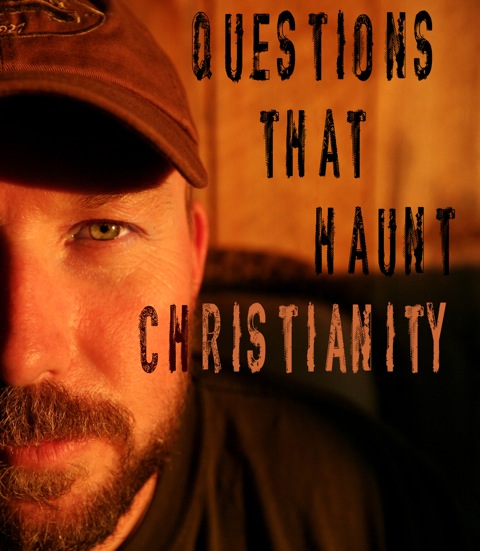
The Cross Is Not Necessary [Questions That Haunt]
February 27, 2013 By Tony Jones  


Last week’s question came from Elise, and it’s puts an even finer point on our Lenten #progGOD Challenge (there are already some great responses). Here it is, in a nutshell (read the original post to get the whole context):
I have had an ongoing relationship with Christianity in which I alternately really get it or really don’t. I really dug into this the last time I fell away, and the biggest issue I have is with the Cross

That’s not to say I have a problem with Jesus sacrificing Himself on the Cross; I understand the mercy, the sacrifice, the love that is inherent in that gesture, and that part I think is awesome. The issue that I have is that it was required in the first place. How could a loving God heap death and/or eternal damnation on his children for their sins and call it justice? Why did Jesus have to step up in the first place?…

How is the Cross’s necessity combined with the fact that only about 1/3 of the world’s population identifies as Christian/Believer a demonstration of the justice of a Loving God?

Well, Elise, it’s a great question, and it’s one that’s on my mind a lot lately. I am thinking about writing a book on the death of Jesus on the Cross — its meaning and significance — even as I’m also writing a book on prayer. It’ll be kind of a book sandwich.

You’re not exactly asking Why Jesus died on the Cross. In fact, your question is less about Jesus, and more about the very nature of God. You’re asking if God required Jesus’ death.

The short answer is No.

No, Jesus’ death was not required in order for human beings to be reconciled to God.

The classic conception of God is that God is capable of all things. Indeed, the most classic way conception is this: when people talk about a being that is capable of all things, we call that God. This is how Aristotle and Aquinas write of God, and it’s what I think of when I think of God. If there is a God, this God is capable of all things.

Therefore, it stands to reason that God did not have to allow the death of Jesus to be the mechanism by which humanity and all of creation was reconciled to God.

In other words, if you agree with me that God, by definition, is capable of anything, then you must also agree that God could have chosen another way to achieve reconciliation. Indeed, God could have chosen from an infinite number of ways. Indeed, God could have chosen to never allow the breach in the relationship in the first place — God could have stopped “The Fall” and thereby preempted any need for reconciliation.

Your question betrays that you, like many of us, were raised in the shadow of Reformed theology. In those circles, it’s common to argue that God’s justice “demands” a sacrifice — since we’ve sinned, God “cannot” let us experience eternal life in his bosom. We “must” pay for our sins, and since we cannot, Jesus pays that price for us.
I put certain words in rhetorical quotes in the previous paragraph because I reject them, just as I reject all language that implies that God is ever bound to do anything. I believe the God is one being in the cosmos who has complete and total freedom. God is the only non-contingent entity, anywhere, ever.

These are statements that I reject as non-sensical:
- God was bound to ________.
- God must do ________.
- God’s character requires that he ________.
- God cannot ________.

You get the point. So here’s an internal conflict in Reformed theology. One the one hand, Reformed theology teaches that God is absolutely sovereign and can do whatever God wants (which I agree with). On the other hand, Reformed theology teaches that God’s sense of justice requires propitiation for human sin. As you can see, those two points are incompatible.

As I’ve laid out in other posts — and hopefully in the forthcoming book — I think there are other reasons for the crucifixion that are far more beautiful, life-giving, and intellectually satisfying than the Reformed answer that Jesus death was in any way required.

So I ultimately agree with you: it’s very troubling to think that Jesus’ death was required. In fact, it’s theologically incompatible with a traditional view of God. Therefore I urge you to reject that notion.

@@@@
Notice Jones makes up his own "philosophy" he does not open a Bible or consult historic Christian doctrines or theology
  
So here is what God's Word says: 
Jesus says about himself----"Was it not necessary that the Christ should suffer these things and enter into his glory?” And beginning with Moses and all the Prophets, he interpreted to them in all the Scriptures the things concerning himself. (Luke 24 ESV)

    Thus it was necessary for the copies of the heavenly things to be purified with these rites, but the heavenly things themselves with better sacrifices than these. For Christ has entered, not into holy places made with hands, which are copies of the true things, but into heaven itself, now to appear in the presence of God on our behalf. Nor was it to offer himself repeatedly, as the high priest enters the holy places every year with blood not his own, for then he would have had to suffer repeatedly since the foundation of the world. But as it is, he has appeared once for all at the end of the ages to put away sin by the sacrifice of himself. And just as it is appointed for man to die once, and after that comes judgment, so Christ, having been offered once to bear the sins of many, will appear a second time, not to deal with sin but to save those who are eagerly waiting for him.
(Hebrews 9 ESV)